Barbados Versus Turkmenistan Two Flags: Symbolism, Design & Meaning
Flags do far more than represent a patch of land on a map. They tell stories of struggle, identity, natural beauty, and national pride. At first glance, the flags of Barbados and Turkmenistan could hardly look more different—one is a clean, minimalist Caribbean banner, the other a richly patterned Central Asian textile. Yet when you place Barbados versus Turkmenistan two flags side by side, each reveals a deep cultural narrative worth exploring.
Whether you are a graphic designer looking for visual inspiration, a traveler curious about world cultures, an educator preparing a geography lesson, or a small business owner branding a global audience, understanding what these flags communicate can enrich your perspective. This article breaks down each flag’s design, symbolism, historical background, and practical relevance in plain, helpful language.
What the Barbados Flag Represents
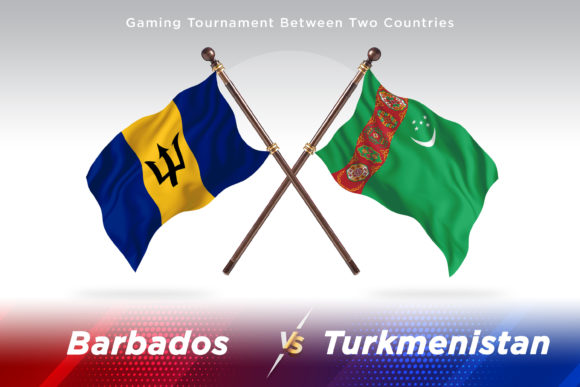
The national flag of Barbados was adopted on November 30, 1966, the day the island became independent from the United Kingdom. It consists of three vertical panels: dark blue on the left and right, and gold in the center. At the heart of the golden stripe sits a black trident head.
Key design elements and their meanings
- Two outer blue panels represent the Caribbean Sea and the Atlantic Ocean that surround the island. The deep blue also evokes the sky and the nation’s connection to the sea.
- Central gold panel symbolizes the golden sands of Barbados’s beaches. It also stands for the sun and the warmth of the Barbadian people.
- Black trident head is the most distinctive element. It comes from the country’s colonial coat of arms and references Neptune, the Roman god of the sea. The broken shaft of the trident—deliberately shown without its handle—represents the break from colonial rule. Barbados remains independent but still connected to its history.
The overall effect is simple, bold, and instantly recognizable. The trident alone makes it one of the most memorable flags in the Caribbean region.
What the Turkmenistan Flag Represents
Turkmenistan’s flag, adopted in 1992 (with minor modifications in 1997, 2001, and 2013), is one of the most intricate national flags in the world. It features a dark green field with a vertical red stripe near the hoist side. Inside that stripe are five carpet patterns (guls) along with a crescent moon and five white stars.
Decoding the layers of meaning
- Dark green background is a traditional color in Islamic and Turkic cultures, symbolizing nature, life, and the country’s agricultural heritage.
- Red vertical stripe carries five distinct carpet guls, each representing one of the major tribes of Turkmenistan: Teke, Yomut, Ersary, Chowdur, and Saryk. These geometric patterns are adapted from actual handwoven carpet designs, a direct link to the nation’s most famous craft.
- Crescent moon symbolizes hope for a bright future under a new, independent era.
- Five white stars represent the five provinces (welayats) of the country, and also align with the five carpet patterns above them.
- Olive branch (added below the carpet patterns in 1997) symbolizes peace and neutrality—a status that Turkmenistan officially holds as a permanently neutral nation recognized by the United Nations.
The flag of Turkmenistan is essentially a woven story. Every time it flies, it carries the identity of distinct tribal traditions unified under one nation.
Comparing the Two Flags: Contrasts and Surprising Parallels
When you study Barbados versus Turkmenistan two flags directly, the differences jump out. Barbados opts for a restrained three-color palette and a single bold symbol. Turkmenistan uses a deeper, earthier green, adds complex ornamentation, and packs multiple symbolic layers into one vertical stripe.
Yet there are meaningful similarities worth noticing:
- Both flags use three main colors. Barbados sticks to blue, gold, and black. Turkmenistan uses green, red, white, and gold—but green and red dominate. Neither flag follows the common pan-African or pan-Arab color sets, giving each a distinct visual voice.
- Both flags include symbols that directly reference national identity. The trident is unmistakably Barbadian; the carpet guls are unmistakably Turkmen. Neither flag could be confused for another nation’s.
- Both flags incorporate references to nature and geography. Barbados refers to the sea, sand, and sun. Turkmenistan refers to the earth, agriculture, and the moon.
- Both flags were designed or adopted around a pivotal moment of independence. Barbados raised its flag in 1966 after leaving British rule. Turkmenistan adopted its flag in 1992 after the dissolution of the Soviet Union.
Why Someone Might Be Interested in This Comparison
You might not think about flags often in daily life. But comparing national symbols like these can be useful in several practical ways:
For creative professionals and designers
Studying how different cultures solve the visual problem of “represent a nation in one image” is a fantastic exercise in restraint versus richness. The Barbados flag teaches you how much power a single icon can hold. The Turkmenistan flag shows you how to layer meaning without losing clarity. If you work in branding, logo design, or illustration, both approaches offer lessons worth borrowing.
For educators and students
Flags are entry points into broader historical and cultural discussions. A comparison of Barbados versus Turkmenistan two flags naturally leads into topics like colonialism, independence movements, tribal identity, textile traditions, and Islamic symbolism. It gives students a visual anchor for otherwise abstract concepts.
For travelers and cultural enthusiasts
Knowing what a flag means before you visit a country shows respect and deepens your experience. If you plan to visit Barbados, understanding the trident helps you appreciate the national pride Barbadians feel. If you travel to Turkmenistan, recognizing the carpet guls helps you understand the importance of textile heritage in daily life.
For entrepreneurs and small business owners
If you export products, run an e-commerce store, or market to international audiences, being culturally literate helps you avoid mistakes and build authentic connections. You do not need to be a vexillologist, but knowing that a symbol like the trident is deeply meaningful to Barbadians—or that the carpet designs are sacred to Turkmen communities—can guide respectful branding choices.
Things to Consider Before Choosing or Using Flag Imagery
Whether you are creating content, designing merchandise, or writing about national symbols, a few points are worth keeping in mind:
- Respect national laws. Many countries have strict rules about how their flag can be displayed, reproduced, or altered. In Turkmenistan, for instance, the flag must be treated with official protocol. Always check usage guidelines before incorporating a flag into commercial products.
- Avoid distortion. The proportions, colors, and arrangement of both flags are standardized. Stretching, recoloring, or cropping them in ways that change their meaning can be seen as disrespectful. Use official hex codes or Pantone values when possible.
- Context matters. Comparing Barbados versus Turkmenistan two flags in an educational or artistic context is generally welcome. Using a flag purely as a decorative graphic without acknowledging its cultural weight can come across as careless.
- Learn the history behind the symbols. The trident is not just a cool shape—it is a statement of independence. The carpet guls are not just pretty patterns—they are emblems of specific tribes. Knowing the backstory adds integrity to anything you create.
Where Flag Knowledge Can Be Applied in Real Life
Understanding flags like these is not a niche hobby reserved for enthusiasts. Here are realistic scenarios where this knowledge adds value:
- A blogger writing a post about world flag symbolism can use Barbados versus Turkmenistan two flags as a case study in how geography and tribal history shape national identity.
- A freelancer designing a world culture infographic for a client can confidently represent each flag accurately and explain its meaning in the caption.
- A small business owner sourcing textiles from Central Asia might recognize the carpet guls in Turkmenistan’s flag and use that awareness to build rapport with suppliers.
- A hobbyist learning graphic design can practice simplifying complex patterns (like the Turkmen carpet guls) or maximizing impact with minimal elements (like the Barbados trident).
- An educator preparing a unit on post-colonial nations can use both flags to compare how former British colonies and former Soviet republics expressed their new identities visually.
A Few Practical Observations
One thing that stands out when you study Barbados versus Turkmenistan two flags is how each design fits its environment. Barbados is a small island nation surrounded by blue water—its flag mirrors that openness and clarity. Turkmenistan is a landlocked country with a deep textile tradition—its flag feels woven, layered, and grounded in the earth.
Neither design is better than the other. Each works perfectly for its context. And both prove that a national flag, regardless of complexity, can communicate volumes to anyone willing to look closely.
The next time you see a flag—whether on a travel website, in a news report, or flying outside a building—take a moment to decode it. What colors stand out? What symbols repeat? What story is being told? Comparing flags like these sharpens your eye and deepens your appreciation for how different cultures choose to represent themselves.
Flags are not just fabric. They are visual shorthand for history, values, and identity. And when you understand what they mean, the world becomes a more connected place.