Belize Versus Kyrgyzstan Two Flags: A Deep Dive into Design, Symbolism, and National Identity
When you come across the flags of Belize and Kyrgyzstan side by side, the contrast is immediate and striking. One feels dense, tropical, and story-filled; the other feels bold, geometric, and tied to the vast Central Asian steppe. But what do these differences really mean? Exploring Belize versus Kyrgyzstan two flags reveals more than just aesthetic preferences—it uncovers how each nation chooses to represent its history, its people, and its aspirations for the future. For travelers, designers, or anyone involved in international branding, understanding these flags offers practical insight into how national symbols function in a globalized world.
First Impressions: Complexity Versus Bold Minimalism
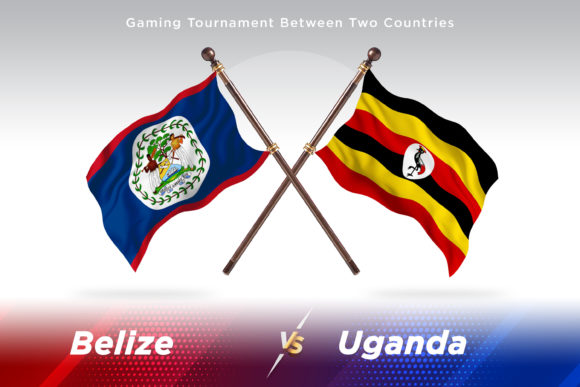
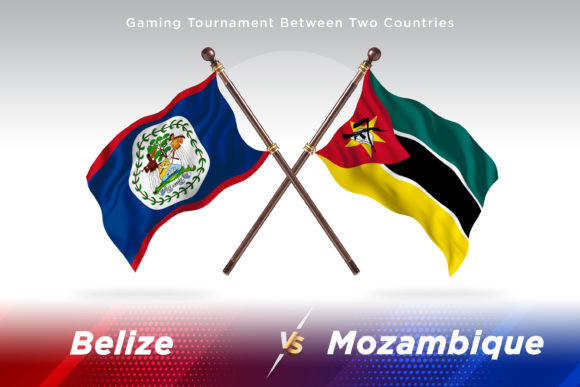
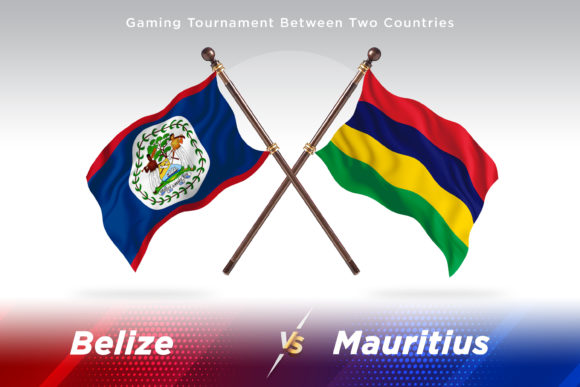
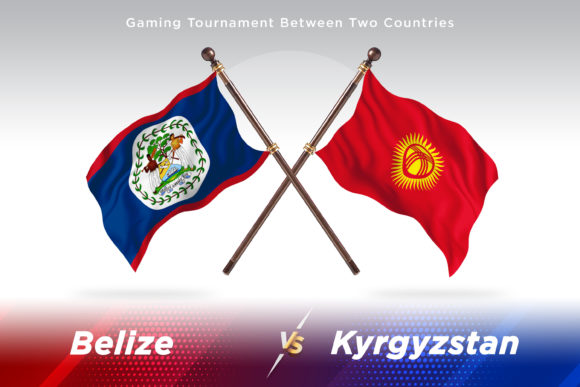
The flag of Belize is one of the most complex national flags in the world. It features a royal blue field with narrow red stripes at the top and bottom, and at its center sits a large white disc containing the country's coat of arms. That coat of arms itself is densely packed: a mahogany tree rises in the middle, flanked by two woodcutters—one holding an axe, the other a paddling oar—with a shield, a wreath, and the national motto “Sub Umbra Floreo” (Under the Shade I Flourish) wrapped around the scene. The flag includes a total of twelve colors, making it a printer's challenge and a vexillologist's dream.
In contrast, the flag of Kyrgyzstan is built on simplicity. A solid red field serves as the background, and at the center sits a golden-yellow sun with forty evenly spaced rays. Inside the sun, a stylized representation of the tündük—the crown-shaped wooden frame at the top of a traditional Kyrgyz yurt—crosses the disk. Only two colors appear: red and yellow. The message is immediate, readable from a distance, and deeply tied to nomadic heritage.
Placing Belize versus Kyrgyzstan two flags in direct comparison highlights a fundamental question: should a flag tell a detailed story, or should it be instantly recognizable from a distance? Belize opts for the former, packing its flag with historical narrative. Kyrgyzstan opts for the latter, favoring a symbol that can be seen flapping across a stadium or printed on a tiny lapel pin without losing meaning.
Historical Threads Woven Into Cloth
The Belizean flag was officially adopted on September 21, 1981, the day the nation gained full independence from the United Kingdom. However, its design evolved from the flag of the People's United Party (PUP), which had used a similar motif during the decolonization movement. The coat of arms dates back even further, to colonial British Honduras in 1907, but the color scheme—blue with red trim—was chosen to represent the two major political parties coming together under a unified national identity. The woodcutters pay homage to Belize's historical reliance on the mahogany logging industry, which shaped its economy and settlement patterns for centuries.
Kyrgyzstan's flag was adopted on March 3, 1992, less than a year after the country declared independence from the Soviet Union. The red field recalls the banner of Kyrgyz hero Manas, a legendary figure who united the tribes. The sun with forty rays symbolizes the forty clans that, according to tradition, form the Kyrgyz nation. The tündük at the center represents the unity of the people under one roof, the continuity of the family, and the hospitality central to nomadic life. When you study Belize versus Kyrgyzstan two flags, you see that both are post-colonial or post-Soviet creations, but they draw on very different visual vocabularies: Belize reaches for European heraldry, while Kyrgyzstan reaches for ancient Central Asian iconography.
Color Symbolism and Practical Considerations
Colors on a flag do more than look good—they carry weight. In the Belizean flag, the blue field originally represented the Caribbean Sea and the sky, while the red stripes were added as a compromise to include the opposition party's color, creating a bipartisan symbol. The coat of arms introduces green for the forest, brown for the woodcutters' skin, white for the scroll, and a variety of other hues. This variety makes the flag vibrant but also creates practical issues. Reproducing the Belize flag accurately requires careful color matching, especially for digital screens, embroidery, or mass printing. If you are ordering Belizean flags for an event or using them in educational materials, you need a high-resolution source to avoid muddying the intricate details.
Kyrgyzstan's red and yellow palette is far easier to reproduce. The sun and tündük are typically printed in a bright gold, and the red background is a deep, distinct shade often associated with courage and bravery. For designers working on international projects—whether for travel websites, cultural exhibitions, or classroom resources—the Kyrgyzstan flag scales cleanly across formats. You can shrink it to favicon size and still read the sun and tündük. That is not the case with the Belize flag, where the coat of arms becomes a blur at small dimensions. This is a genuine consideration for anyone designing digital content that includes Belize versus Kyrgyzstan two flags side by side.
What Each Flag Says About National Character
National flags are not just administrative symbols; they are emotional anchors. When you look at the Belize flag, you get a sense of a place shaped by labor, colonial history, and natural abundance. The mahogany tree is not just a tree—it is a reminder of the British Empire's extraction economy, but also of the resilience of the people who worked the forests. The woodcutters are depicted as ordinary men, not aristocrats or warriors, which gives the flag a grounded, working-class dignity. The motto “Under the Shade I Flourish” is an invitation: the nation thrives when its people and resources are protected.
The Kyrgyzstan flag speaks to a different kind of national pride. The yurt is the mobile home of the steppe nomads, and the tündük is its most sacred architectural element. By placing it inside the sun, the flag says: our home is under the sky, and we carry it with us. The forty rays are not just a number—they are a declaration that the Kyrgyz people are many clans united. There is no human figure on the flag, no tools of labor. Instead, the symbol is abstract, cosmic, and deeply rooted in a worldview that values movement, community, and harmony with nature. When you compare Belize versus Kyrgyzstan two flags, you are essentially comparing a settler-colonial narrative of resource extraction with a nomadic narrative of kinship and sky.
Modern Use and Cultural Visibility
In today's globalized world, flags appear everywhere: on social media emoji keyboards, at international airports, on sports jerseys, and in merchandise. Each flag's complexity affects how easily it travels. The Kyrgyzstan flag has become a recognizable emblem at events like the World Nomad Games, where it is flown alongside other Central Asian banners. It also appears prominently in global sports—Kyrgyz athletes carry it at the Olympics, and its bold design photographs well in crowded stadiums.
The Belize flag, by contrast, often requires a closer look. In international contexts, people may recognize the blue and red stripes but struggle to remember the coat of arms in detail. That is not necessarily a weakness—it simply means the flag rewards attention. For Belizean diaspora communities, the flag is a powerful connector to home, often seen at cultural festivals, independence day parades, and community gatherings in the United States and the United Kingdom. For educators teaching about Caribbean or Central American history, the Belize flag offers a rich visual entry point for discussing colonialism, independence, and national identity.
If you are a content creator, blogger, or designer working with both flags, consider how your audience will encounter them. A website comparing Belize versus Kyrgyzstan two flags might use the Kyrgyzstan flag as a hero image for its boldness and the Belize flag as an interactive detail that reveals more information on hover or click. This respects the character of each design while serving user experience.
Design Principles: What We Can Learn from Both
Vexillographers—people who study flag design—often debate whether a good flag should be simple enough that a child can draw it from memory. The Kyrgyzstan flag meets that test: a red rectangle with a yellow sun and a yurt crown in the middle. The Belize flag does not, and that is okay. Not every flag needs to follow the same rules. Belize's flag prioritizes storytelling over simplicity, and in an era where national identity is increasingly complex, that might be exactly the right choice.
When I teach design workshops on national symbols, I often use Belize versus Kyrgyzstan two flags as a case study in trade-offs. Belize teaches us that complexity can be meaningful if every element carries historical weight. Kyrgyzstan teaches us that a single, well-chosen symbol can hold an entire culture. Both approaches work, but they work for different reasons. If you are designing a logo, a patch, or even a family crest, ask yourself: do I want to tell a detailed story, or do I want to make an instant impact? The answer will guide your visual choices.
Practical Takeaways for Travelers and Enthusiasts
If you are planning to visit either country, knowing the flag is a simple way to show respect. In Belize, the flag is flown proudly on Independence Day (September 21) and at government buildings year-round. It is also common to see the flag painted on boats, souvenir shops, and even food stalls. Understanding the woodcutters and the mahogany tree will give you a deeper appreciation for the country's history as you explore forests, coastal towns, and Mayan ruins.
In Kyrgyzstan, the flag appears everywhere from Bishkek's Ala-Too Square to remote yurt camps in the Tian Shan mountains. The forty-ray sun is a source of national pride, and locals will appreciate if you recognize the tündük. When attending a festival or a family gathering in Kyrgyzstan, the flag is often displayed alongside traditional felt carpets and horse tack. Knowing the symbolism behind it can open conversations and deepen your travel experience.
For collectors of flags, comparing Belize versus Kyrgyzstan two flags offers two distinct challenges: sourcing a high-quality Belize flag with accurate coat-of-arms details, and finding a Kyrgyzstan flag with the correct sun proportions (the diameter of the sun should be three-fifths the width of the flag). These details matter for authenticity and display.
Final Observations on Two Unique Designs
The flags of Belize and Kyrgyzstan stand as monuments to different kinds of national imagination. One is dense, layered, and tied to a specific geography of forest and sea. The other is spare, radiant, and tied to a horizontal landscape of steppe and sky. Both succeed on their own terms. By putting Belize versus Kyrgyzstan two flags in conversation, we learn that there is no single formula for a great flag. There is only the question of whether a flag speaks truthfully about the people it represents. In both cases, the answer is a clear yes.
Whether you are a designer, a traveler, a teacher, or simply someone curious about the world, these two flags offer a masterclass in how symbols work. They remind us that a piece of cloth can hold history, identity, and emotion—and that the best flags are the ones that make you want to learn the story behind them.