Belize vs Comoros Flags: A Detailed Comparison of Two Distinct National Symbols
Flags are far more than pieces of fabric fluttering in the wind. They encapsulate history, identity, and the collective aspirations of a nation. At first glance, the flags of Belize and Comoros might seem worlds apart—one from Central America, the other from the Indian Ocean. Yet both tell powerful stories of independence, unity, and cultural pride. This article explores the design, symbolism, history, and practical significance of each flag, comparing them side by side to help you understand what makes each unique and what they reveal about their nations.
Why Compare Belize and Comoros?
Comparing two flags from different continents might appear arbitrary, but it offers a fascinating lens into how countries express identity through symbols. Belize, the only English-speaking country in Central America, gained independence from the United Kingdom in 1981. Comoros, an archipelago off the coast of Africa, achieved independence from France in 1975. Both flags reflect colonial heritage, natural resources, and the struggle for unity among diverse populations. By examining them together, you gain insight into how geography, history, and culture shape national emblems.
Design and Colors
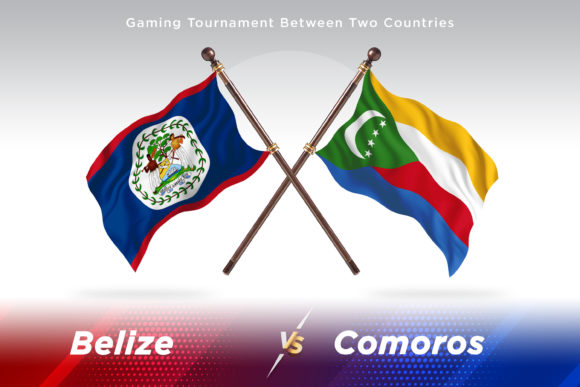
The national flag of Belize features a royal blue field with narrow red stripes at the top and bottom. At the center lies a white circle containing the country's coat of arms. The blue represents the People's United Party, which led the independence movement, while the red stripes symbolize the opposition United Democratic Party, reflecting national unity. The coat of arms is encircled by a wreath of 50 leaves—originally symbolizing the year 1950 when the independence movement began, though the number has since been increased to reflect the country's growth.
The Coat of Arms in Detail
Inside the white circle, the coat of arms is rich with meaning:
- A mahogany tree dominates the center, representing Belize's historic timber industry and natural wealth.
- A shield features tools used by the mahogany workers: a paddle, a squaring axe, a saw, and a beating axe.
- Two supporters stand on either side: a Mestizo man holding an axe and a Creole man holding a paddle, symbolizing the ethnic diversity and labor that built the nation.
- Below the shield, a scroll reads the national motto: "Sub Umbra Floreo" (Latin for "Under the Shade I Flourish"), referring to the mahogany tree.
- The entire coat of arms rests on a grassy mound, signifying the land itself.
Historical Context
The Belize flag was officially adopted on September 21, 1981, the day the country achieved full independence from Britain. However, the design evolved from an earlier colonial flag and the coat of arms dates back to the 19th century. The flag's inclusion of both political parties' colors (blue and red) was a deliberate gesture of reconciliation, emphasizing that the new nation would move forward together. This makes Belize one of the few flags in the world that explicitly incorporates the symbols of rival political factions into a unified national emblem.
Design and Colors
The flag of Comoros consists of four horizontal stripes in yellow, white, red, and blue (from top to bottom). On the left side, a green triangle extends inward, bearing a white crescent moon and four white stars. The green triangle symbolizes the islands' Islamic faith, while the crescent and stars are traditional Islamic symbols. The four stars and four stripes each represent the four main islands of the archipelago: Grande Comore, Mohéli, Anjouan, and Mayotte.
Symbolism of the Stripes and Stars
Each stripe carries specific meaning:
- Yellow represents the island of Mohéli.
- White represents Mayotte (though Mayotte remains under French administration, Comoros continues to claim it).
- Red represents Anjouan.
- Blue represents Grande Comore.
The four stars inside the green triangle also correspond to these four islands, reinforcing the message of unity across the archipelago. The crescent moon, a central symbol of Islam, reflects the dominant religion practiced by over 98% of the population.
Historical Context
Comoros adopted its current flag on December 23, 2001, following a series of political reforms aimed at ending years of instability and coups. Previous flags had featured only three stripes, corresponding to the three islands that initially formed the independent nation (Mayotte chose to remain with France). The addition of the fourth stripe and star was a deliberate political statement, asserting Comoros's claim to Mayotte. The flag's design thus serves both as a symbol of national unity and as a reminder of territorial aspirations.
Visual Complexity
The Belize flag is highly detailed due to its coat of arms, which includes human figures, tools, a tree, and a scroll. This makes it one of the more complex national flags in the world. In contrast, the Comoros flag is geometric and minimalist, relying on stripes, a triangle, and simple symbols. The Belize flag tells a story through illustration; the Comoros flag communicates through color and shape.
Symbolic Focus
Belize's flag emphasizes economic history and ethnic diversity, with the mahogany tree and workers representing the labor that shaped the country. Comoros's flag emphasizes geography and religion, with the stripes for each island and the crescent for Islam. Belize looks inward to its people and resources; Comoros looks outward to its archipelago and faith.
Color Palette
Both flags use blue and red, but in different ways. Belize uses a deep royal blue with red stripes, while Comoros uses a lighter blue alongside yellow, white, and green. Belize's flag feels more traditional and heraldic; Comoros's palette is reminiscent of other African and Islamic flags, with green carrying religious significance.
Misconception: The Belize Flag's Wreath Has Exactly 50 Leaves
Many sources state that the wreath around Belize's coat of arms contains 50 leaves, representing the year 1950. However, modern versions of the flag often have more than 50 leaves due to design variations. The exact number has changed over time, so relying on the "50 leaves" fact is outdated. What remains consistent is the wreath's function as a frame that honors the independence movement's origins.
Misconception: Comoros's Four Stars Represent Only Three Islands
Some people assume the four stars on the Comoros flag represent the three independent islands plus the crescent. In reality, all four stars represent the four islands of the archipelago, including Mayotte, which is not under Comorian control. This is a source of ongoing political tension, and the flag serves as a visual claim to that territory.
Misconception: Both Flags Are Newly Designed
While both flags were officially adopted in the late 20th or early 21st century, their elements have much older roots. Belize's coat of arms dates back to the 1800s when it was used in colonial seals. Comoros's use of the crescent and stars is centuries old, rooted in Islamic tradition. The flags are modern in their official adoption but ancient in their symbolism.
Practical Relevance in Modern Life
Understanding the differences between these flags is not just an academic exercise. For travelers, knowing the symbolism can enhance cultural appreciation. If you visit Belize, you'll see the flag displayed prominently during Independence Day celebrations on September 21, with citizens wearing blue and red and referencing the coat of arms' imagery in parades. In Comoros, the flag is central to National Day on July 6, and its green triangle and crescent appear on currency, stamps, and official buildings.
For students of political science or international relations, both flags offer case studies in how newly independent nations construct identity. Belize's flag is a compromise between rival parties; Comoros's flag is a statement of territorial unity. These are not static symbols but living documents that evolve with national priorities.
Educational and Creative Applications
Teachers and educators can use the Belize and Comoros flags to illustrate several concepts:
- Post-colonial identity — how former colonies create new symbols after independence.
- Political compromise — Belize's inclusion of both blue and red from opposing parties.
- Irredentism — Comoros's inclusion of Mayotte despite it being under French control.
- Semiotics in design — how color, shape, and imagery communicate meaning.
Artists and designers can also draw inspiration from the flags' distinct aesthetics. The detailed coat of arms of Belize offers a lesson in heraldic composition, while the clean geometric layout of Comoros exemplifies modernist flag design. Comparing the two can spark conversations about effective visual communication.
Broader Lessons in Flag Design
Flags are often evaluated based on principles of simplicity, meaningful symbolism, and distinctiveness. The Belize flag breaks the simplicity rule but compensates with deep historical storytelling. The Comoros flag follows a more conventional pattern but uses its simplicity to convey a clear political message. Neither flag is "better"—they each serve their purpose within their national context.
When you encounter a flag you don't recognize, ask yourself: What story does it tell? Which elements are literal, and which are abstract? How does it reflect the country's geography, history, religion, or politics? The flags of Belize and Comoros provide excellent starting points for this kind of inquiry because they are both rich in meaning yet accessible in design.
Conclusion
The flags of Belize and Comoros, though separated by thousands of miles, share a common purpose: to unite their people under a visible symbol of identity. Belize's flag is an intricate portrait of its workforce, natural resources, and political reconciliation. Comoros's flag is a bold statement of Islamic faith, island unity, and territorial aspiration. By comparing them, we gain a deeper appreciation for how nations compress their entire story into a few colors, shapes, and images.
Whether you are a student, a traveler, or simply someone curious about the world, understanding these flags enriches your sense of global culture. Next time you see either flag—on a government building, at a sporting event, or in a photograph—you'll recognize the history and meaning woven into every stripe and symbol.