Belarus Versus Pakistan Two Flags: A Study in National Identity Through Design and Symbolism
The Unspoken Language of National Banners
Flags are rarely mere pieces of colored fabric. They compress centuries of history, political struggle, geography, and collective memory into a single visual statement. When one examines the Belarus versus Pakistan two flags comparison, what emerges is not simply a contrast of green and red, crescent and ornament, but a dialogue between two very different conceptions of national identity. Both flags command recognition. Both stir deep patriotic sentiment. Yet the visual vocabularies they employ could hardly be more divergent. Understanding these two flags on their own terms, and in juxtaposition, reveals much about how nations choose to represent themselves to the world.
The flag of Pakistan, adopted in 1947, carries a distinctly religious and geographical symbolism. The flag of Belarus, in its current form officially adopted in 2012 but based on the 1951 design, speaks to endurance, agrarian roots, and a particular vision of continuity. The Belarus versus Pakistan two flags discussion invites us to ask: what does each country prioritize in its self-representation, and how do those priorities reflect deeper realities of governance, history, and cultural psychology?
A Design Born from Political Vision
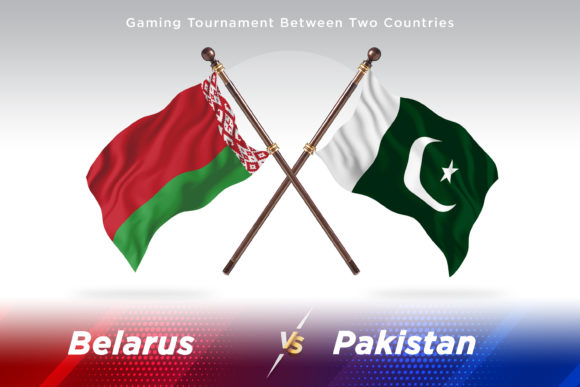
The Pakistan flag was designed by Syed Amir-uddin Kedwaii, based on the original flag of the All-India Muslim League. Its geometry is precise: a dark green field occupying the majority of the flag, with a white vertical stripe at the hoist side. Within the green field sit a white crescent moon and a five-pointed star. The proportions follow a 2:3 ratio, giving the flag a balanced, grounded appearance that feels neither too elongated nor too squat.
The green is not arbitrary. It has long been associated with Islamic tradition, and specifically with the Muslim communities of the Indian subcontinent. The white stripe represents the religious minorities of Pakistan, a deliberate gesture toward pluralism at the moment of the nation's founding. The crescent symbolizes progress, while the five-pointed star represents light and knowledge. Together, these elements announce Pakistan as an Islamic republic that nonetheless acknowledges its diverse religious makeup.
What is striking about the Pakistan flag is how directly it communicates its founding ideology. Unlike flags that rely on historical coats of arms or abstract geometric patterns, the Pakistan flag wears its raison d'être on its sleeve. There is no ambiguity about what this nation stands for at the level of state identity. The crescent and star are immediately legible symbols to anyone familiar with Islamic iconography, and the white stripe makes a clear statement about minority inclusion that was forward-thinking for its time.
Practical Uses and National Resonance
The Pakistan flag appears everywhere from government buildings in Islamabad to the homes of diaspora communities in London, Dubai, and New York. It is flown with particular intensity on national holidays such as Pakistan Day (March 23) and Independence Day (August 14). During these occasions, the flag becomes a unifying visual anchor for a population that speaks multiple languages and comes from diverse ethnic backgrounds.
One practical observation worth noting: the flag's simple geometry makes it easy to reproduce accurately, whether in bunting, on digital screens, or embroidered on clothing. This consistency matters for a national symbol. When a flag is too complex, variations in reproduction can dilute its meaning. The Pakistan flag avoids this problem entirely. Anyone can draw it from memory—green rectangle, white stripe, crescent, star—and remain faithful to the original.
A Design Steeped in Folk Tradition
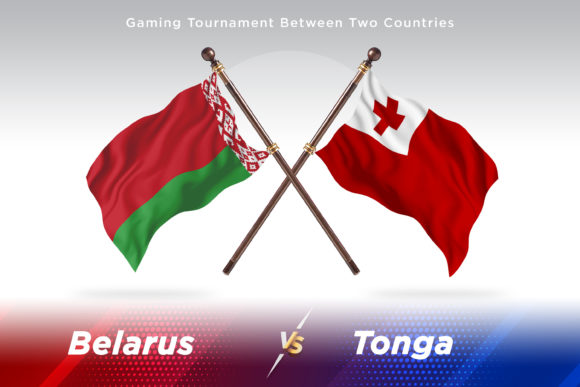
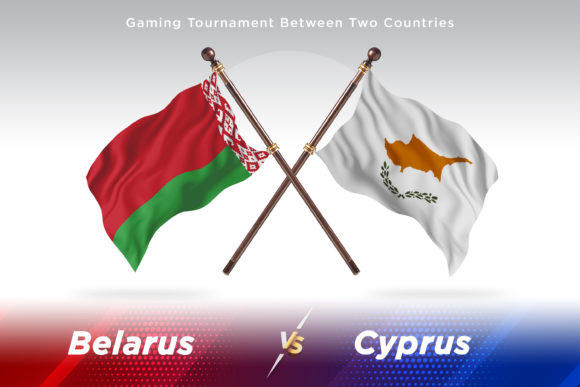
The flag of Belarus consists of a red horizontal stripe at the top and a green horizontal stripe at the bottom, with a red-and-white ornamental pattern running vertically along the hoist side. The flag follows a 1:2 ratio, making it noticeably wider than many national flags. The red represents the country's past, particularly the Battle of Grunwald and the Soviet victory over Nazi Germany. The green stands for forests and fields—Belarus is one of Europe's most heavily forested countries—and for hope. The ornamental pattern, known as the uzor, is derived from a traditional Belarusian embroidery design dating to the early twentieth century.
What makes the Belarus flag particularly interesting in the context of the Belarus versus Pakistan two flags comparison is this ornamental element. It is not a coat of arms. It is not a religious symbol. It is a domestic, folkloric pattern that speaks to everyday material culture rather than high politics or theology. The pattern is specifically taken from a dress worn by a local woman named Matriona Makarevich in the early 1900s, and it was incorporated into the flag design in 1951 during the Soviet period. After Belarus gained independence, the flag was briefly replaced with a white-red-white design, but that version was short-lived. In a 1995 referendum, the current flag was reinstated with minor modifications, and it has remained ever since.
This history matters. The Belarus flag is not a clean break with the Soviet past but a continuation of it. For supporters of the current government, this continuity represents stability and resistance to external pressure. For critics, the flag carries uncomfortable associations with authoritarian governance. Few national flags generate such sharply divided emotional responses among their own citizens.
Real-World Applications and Symbolic Weight
In practical terms, the Belarus flag's ornamental pattern creates certain challenges. The uzor is relatively complex, requiring careful reproduction to maintain its correct proportions and geometry. On a flag flapping in the wind, the detail can be difficult to read at a distance. This is a trade-off the design makes in favor of cultural specificity over long-distance legibility. When seen up close, however, the pattern is distinctive and unmistakably Belarusian.
The flag is displayed prominently at official state functions, military parades, and diplomatic events. It is also used widely by the Belarusian diaspora, though often in contested ways—some diaspora groups prefer the white-red-white flag, creating a visual marker of political allegiance that goes beyond mere national pride.
Religious Identity Versus Cultural Rootedness
The most obvious difference in the Belarus versus Pakistan two flags comparison is what each flag chooses to foreground. Pakistan places religious identity at the center of its national symbolism. The crescent and star are unmistakable. The green field reinforces the message. Even the white stripe, while inclusive of minorities, is positioned as a secondary element alongside the dominant green. The message is clear: this is a nation founded on a religious identity, and that identity is primary.
Belarus, by contrast, foregrounds cultural tradition and historical continuity. There is no religious symbol on the Belarus flag. The red and green stripes carry historical and geographical meaning, but they are framed by a folk pattern that speaks to ethnic identity rather than faith. This makes the Belarus flag, in some ways, more inclusive of different religious groups within the country, but also more closely tied to a specific ethnic tradition.
Geometric Minimalism Versus Ornamental Complexity
Pakistan's flag follows a tradition of geometric minimalism that is common among flags designed in the mid-twentieth century. Large blocks of color, simple shapes, high contrast. This approach prioritizes legibility and ease of reproduction. A child can draw the Pakistan flag, and it will still be recognizable.
Belarus's flag takes a different approach. The ornamental pattern adds a layer of visual complexity that rewards closer inspection. This makes the flag less suited to quick recognition at a distance but more distinctive when examined carefully. In a lineup of national flags, the Belarus flag stands out precisely because of that decorative band—it looks like no other flag in the world.
How Flags Function in Diplomacy and Tourism
When nations participate in international events—Olympic games, United Nations assemblies, world expos—their flags become shorthand for their entire national identity. The Pakistan flag signals a nation rooted in Islamic tradition but open to minority communities. The Belarus flag signals a nation proud of its folk heritage and willing to maintain continuity with its Soviet past, for better or worse.
For travelers and business professionals, understanding these signals matters. The flags are not just decorations. They are statements of values. When a Belarusian official stands next to his or her flag during a trade negotiation, the uzor is a quiet reminder that Belarus sees itself as culturally distinct from both Russia and Western Europe. When a Pakistani diplomat does the same, the crescent and star announce a particular vision of national identity that has deep historical roots.
Domestic Reception and Debate
No flag is universally beloved. In Pakistan, debates occasionally arise about whether the flag sufficiently represents non-Muslim citizens, despite the white stripe. In Belarus, the flag is a lightning rod for political disagreement, with the opposition favoring an alternative design. The Belarus versus Pakistan two flags comparison thus highlights how a flag can be simultaneously a source of unity and division.
For researchers and educators, this tension is precisely what makes flags such rich objects of study. They are not static symbols. They evolve, they provoke debate, and they carry different meanings for different audiences. A flag teacher in a classroom in Lahore and a flag historian in Minsk are working with the same basic materials—fabric, color, geometry—but the stories they tell about those materials could hardly be more different.
Practical Takeaways for Creators and Professionals
For designers and branding professionals, the Belarus versus Pakistan two flags comparison offers a useful case study in how national symbols balance competing priorities. Pakistan's flag prioritizes clarity and ideological directness. Belarus's flag prioritizes cultural specificity and historical continuity. Neither approach is inherently superior, but each comes with trade-offs in terms of legibility, emotional resonance, and ease of reproduction.
For business owners operating in international markets, awareness of these symbolic differences can inform everything from product packaging to advertising imagery. A flag is never just a flag. It is a concentrated dose of national identity, and getting it wrong—or using it in a way that feels disrespectful—can have real consequences.
For hobbyists and enthusiasts of vexillology (the study of flags), the detailed examination of these two designs reveals how much information can be packed into a simple arrangement of colors and shapes. The crescent and star of Pakistan tell a story of religious identity and political founding. The ornamental band of Belarus tells a story of folk tradition and contested continuity. Together, they demonstrate the extraordinary range of human experience that flags can represent.
Whether one encounters these flags at an international airport, during a sporting event, or in a history textbook, they reward attention. They are not just symbols. They are arguments—arguments about what a nation is, where it came from, and what it hopes to become.