Belarus vs Libya: Understanding the Symbolism and History Behind Two Distinct National Flags
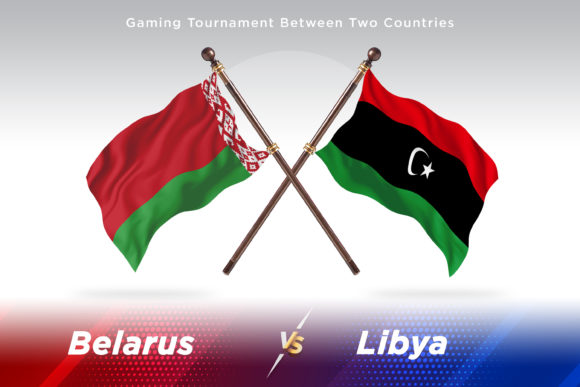
Flags are far more than pieces of colored fabric. They are powerful symbols of national identity, history, and aspiration. When we place the flags of Belarus and Libya side by side, we see two very different visual languages. One is rich with embroidery-like patterns and a ribbon of green and red; the other carries the bold simplicity of black, red, green, and white with a central emblem. Understanding the stories behind these designs helps us appreciate not just the flags themselves, but the nations they represent. This article explores the meaning, history, and significance of the Belarusian and Libyan flags, offering a clear comparison for anyone curious about these two distinct national symbols.
Why National Flags Matter in a Global Context
In our modern world, flags appear everywhere—on government buildings, at sporting events, on social media profiles, and in news headlines. They are shorthand for a country’s identity, often evoking immediate recognition and emotional response. For general readers, understanding a flag’s design goes beyond trivia. It provides insight into a nation’s political history, cultural values, and even its struggles. The flags of Belarus and Libya are especially interesting because both have undergone significant changes in recent decades, reflecting deeper shifts in governance and national identity.
Official Design and Colors
The current national flag of Belarus was officially adopted in 1995 following a controversial referendum. It consists of two horizontal stripes: a wide red upper stripe and a narrower green lower stripe. On the hoist side (the left side when displayed), there is a vertical white-and-red ornamental pattern known as the “Belarusian embroidery” or ornament. This pattern is deeply traditional and appears in folk costumes and textiles throughout the country.
The Meaning Behind the Colors
Each color on the Belarusian flag carries specific symbolism:
- Red represents the country’s history, bravery, and the blood spilled in the struggle for independence. It also recalls the flag of the Belarusian Soviet Socialist Republic, linking the modern state to its Soviet past.
- Green symbolizes hope, renewal, and the lush forests and agricultural lands that cover much of Belarus. It also reflects the nation’s deep connection to nature.
- The white-and-red ornament is a traditional folk pattern that represents cultural continuity, national identity, and the resilience of the Belarusian people. It is often interpreted as a symbol of unity and heritage.
Historical Context and Evolution
The flag’s history is complex. Before 1995, Belarus used a different design—a white-red-white flag that had been associated with the short-lived Belarusian People’s Republic (1918) and later with anti-Soviet movements. After the fall of the Soviet Union, there was debate about which flag to adopt. The 1995 referendum, which many international observers criticized as flawed, replaced the white-red-white flag with the current design. Today, the white-red-white flag is still used by opposition groups and is sometimes seen during protests. For many Belarusians, the official flag represents stability and continuity, while the alternative flag symbolizes a different vision of national identity.
Practical Relevance in Daily Life
In modern Belarus, the national flag flies on government buildings, schools, and during state holidays. It is also a common sight at international sporting events, where Belarusian athletes compete under its colors. For travelers and businesspeople, recognizing the flag is a basic courtesy when engaging with the country. The flag also appears on Belarusian currency, passports, and official documents.
Current Design and Key Features
The current flag of Libya was officially readopted in 2011 after the fall of Muammar Gaddafi’s regime. It consists of three horizontal stripes: red at the top, black in the middle, and green at the bottom. In the center of the black stripe, there is a white crescent moon and a five-pointed star. This design is identical to the flag used by the Kingdom of Libya from 1951 to 1969.
Symbolism of the Libyan Flag
The flag’s elements are rich with meaning:
- Red stands for the blood shed in the struggle for freedom and independence. It also symbolizes the sacrifices of the Libyan people throughout history.
- Black represents the dark days of occupation and oppression, as well as the memory of those who fought for liberation. It is also associated with the banner of the Senussi dynasty, which led the resistance against colonial powers.
- Green is a traditional color in Islam, representing peace, prosperity, and the agricultural wealth of Libya. It also symbolizes hope for the future.
- The crescent and star are classic symbols of Islam, the predominant religion in Libya. They appear on many flags across the Muslim world and represent faith, guidance, and unity.
Historical Changes: From Kingdom to Republic and Back
Libya’s flag history is dramatic. From 1951 to 1969, the Kingdom of Libya used the same red-black-green design with the crescent and star. In 1969, a military coup led by Muammar Gaddafi overthrew the monarchy. For a time, Libya used a flag similar to the Arab Liberation Flag. However, in 1977, after Gaddafi’s shift toward a unique political ideology, Libya adopted a solid green flag—the only national flag in the world at that time to consist of a single color with no design. This green flag represented Gaddafi’s “Green Book” ideology and his vision of a stateless, direct democracy. After the 2011 revolution, the original 1951 flag was restored as a symbol of national unity and a break from the Gaddafi era.
Practical Relevance Today
For Libyans, the flag is a powerful emblem of the 2011 revolution and the aspirations for a democratic future. It flies over government institutions, is waved during national celebrations, and appears in diaspora communities worldwide. For international observers, the flag signals Libya’s sovereignty and its place in the Arab and African worlds. Understanding the flag’s history is essential for anyone engaging with Libyan culture, politics, or business.
Comparing Belarus and Libya: Two Flags, Two Worlds
When we place the Belarusian and Libyan flags side by side, several similarities and differences emerge:
Shared Elements
- Use of red and green: Both flags feature these two colors prominently, though in different arrangements. Red appears as a major stripe in both, while green is present in Belarus’s lower stripe and Libya’s bottom stripe.
- Historical significance: Both flags reflect recent political upheavals. Belarus’s current design emerged from a post-Soviet transition, while Libya’s flag was restored after a revolution.
- Cultural symbolism: Each flag incorporates traditional or religious symbols—Belarus uses an embroidery pattern, while Libya uses the crescent and star.
Key Differences
- Design complexity: The Belarusian flag is more complex with its vertical ornament band, while the Libyan flag uses a simpler horizontal tricolor with a central emblem.
- Number of colors: Belarus uses red, green, and white; Libya uses red, black, green, and white.
- Religious versus folk symbolism: Libya’s crescent and star are explicitly Islamic, while Belarus’s ornament is rooted in folk tradition rather than religion.
- Historical continuity: Libya’s flag is a restoration of a pre-1969 design, while Belarus’s current flag is a modified version of its Soviet-era flag.
Common Misunderstandings
One common assumption is that the Belarusian flag’s ornament is a random decorative element. In reality, the pattern is a traditional ruchunik (embroidered towel) motif, and specific variations carry distinct meanings. Another misconception is that Libya’s original flag was the solid green one used during Gaddafi’s rule. Many people forget that Libya had a different flag before 1969 and after 2011. Understanding these nuances helps build a more accurate picture of both nations.
Travel and Tourism
For travelers visiting Belarus or Libya, recognizing the national flag is a sign of respect and cultural awareness. In Belarus, the flag appears in airports, border crossings, and city centers. In Libya, the flag has become a symbol of national pride since the revolution, and tourists will see it proudly displayed in Tripoli and Benghazi.
International Business and Diplomacy
In business contexts, understanding a country’s flag and its symbolism can be part of building relationships. Companies operating in Belarus or Libya often display the national flag during meetings or at local offices. For diplomats and NGOs, the flag is a key part of official protocols and ceremonies.
Education and Cultural Exchange
Flags are frequently used in classrooms to teach geography, history, and civics. Comparing the flags of Belarus and Libya can help students understand how political change, religion, and cultural heritage shape national symbols. It also encourages critical thinking about how nations choose to represent themselves.
Conclusion: Why Flags Tell a Deeper Story
The flags of Belarus and Libya may appear very different at first glance, but both are products of complex histories and deep cultural values. Belarus’s flag speaks to a nation balancing its Soviet legacy with its folk traditions, while Libya’s flag embodies a journey from monarchy to dictatorship to revolution and back. For general readers, learning about these flags is not just about memorizing colors and patterns. It is about understanding the hopes, struggles, and identities of two unique nations. Whether you encounter these flags in the news, while traveling, or in a cultural exchange, you now have a richer appreciation for the stories they tell. Next time you see a flag, take a moment to consider not just its design, but the history and meaning woven into every stripe and symbol.